
Push Working
Raise the cutter head above the working area or to the maximum height. Retract the hydraulic top link of the three-point hitch, or the tilt cylinders of the loader arms on most hydraulic carriers, to their fully retracted position.
This tilts the entire machine and trap door upward, maximizing the rotor exposure to the material to be processed. Move the carrier forward to engage the target vegetation.
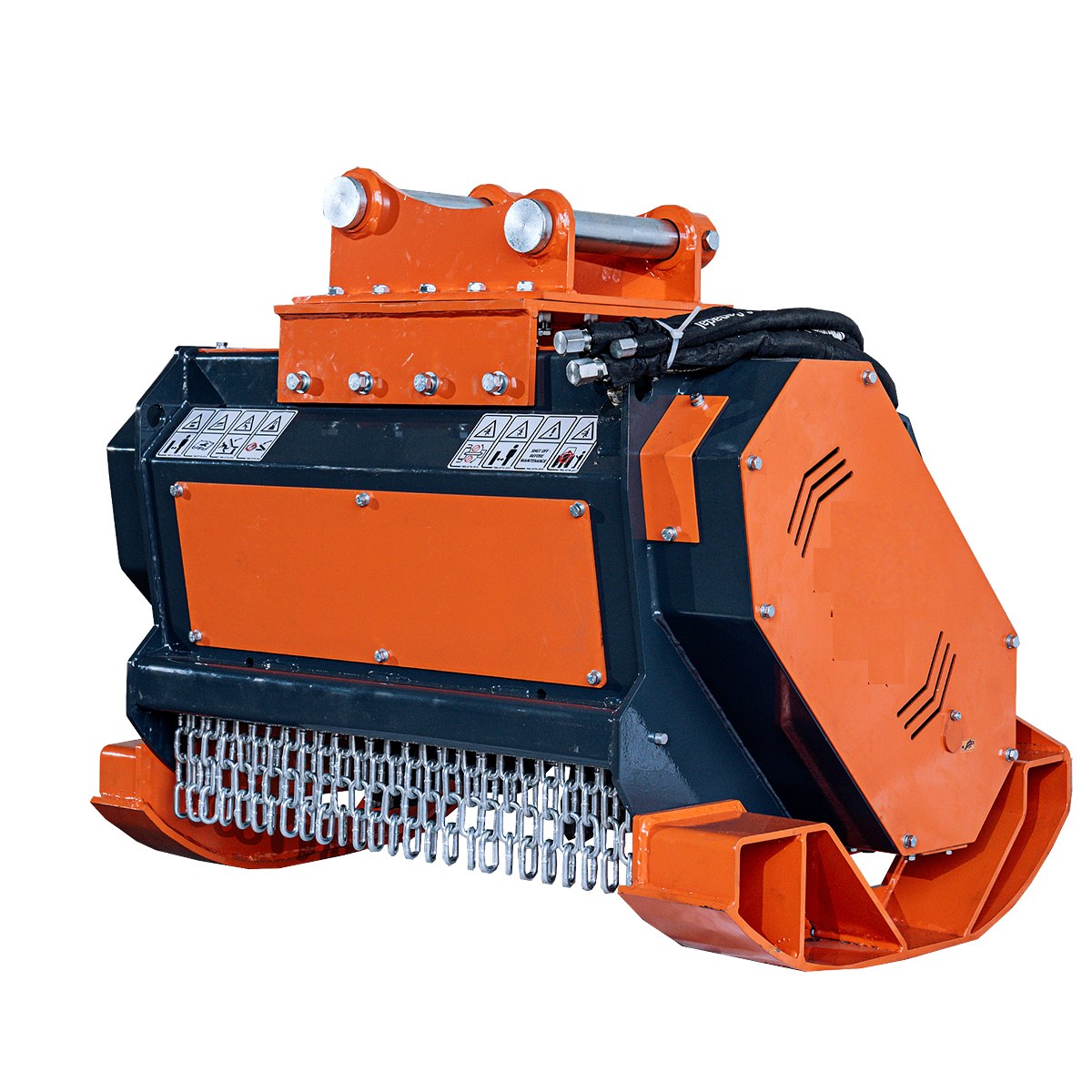
Mulcher Positioning
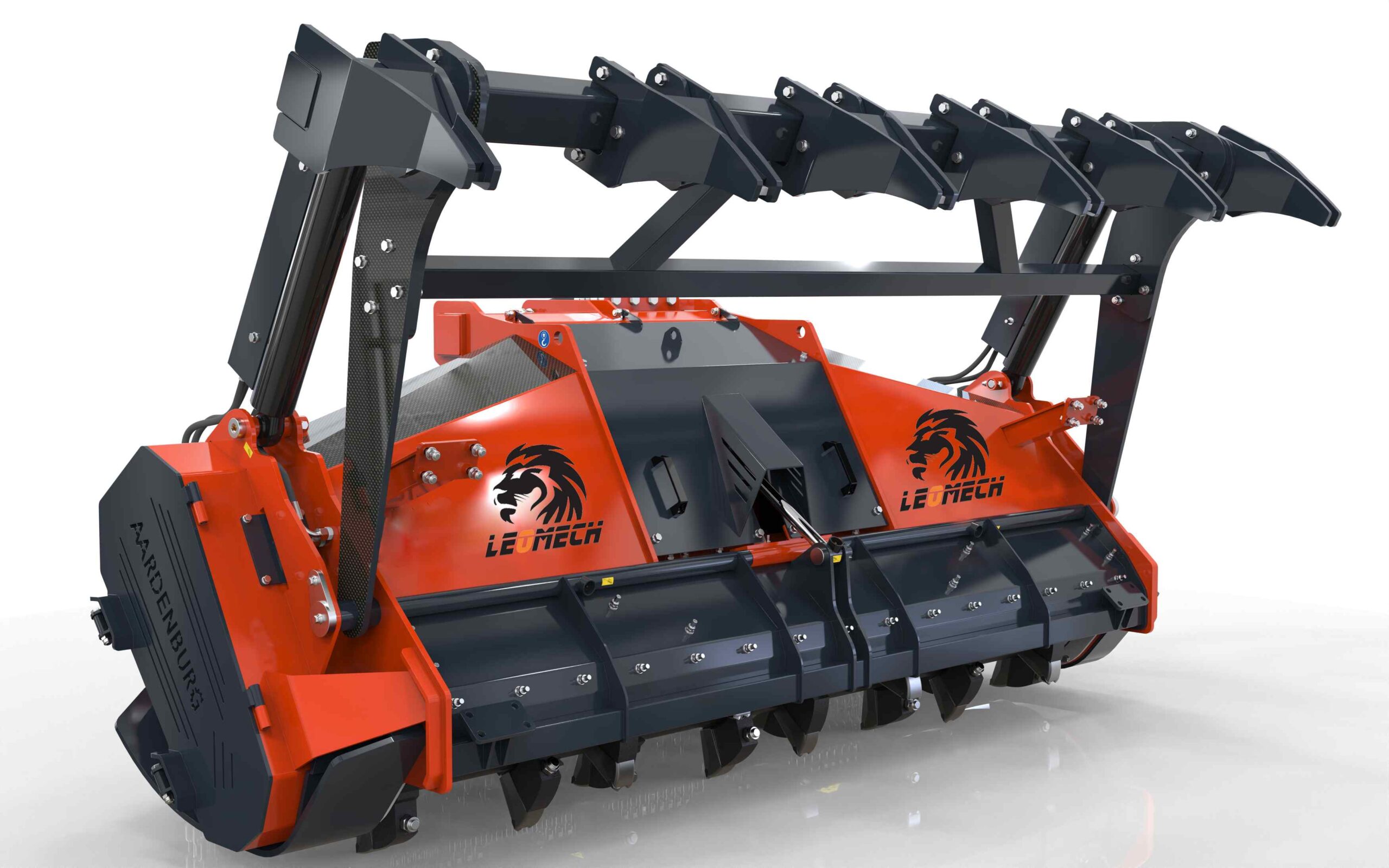
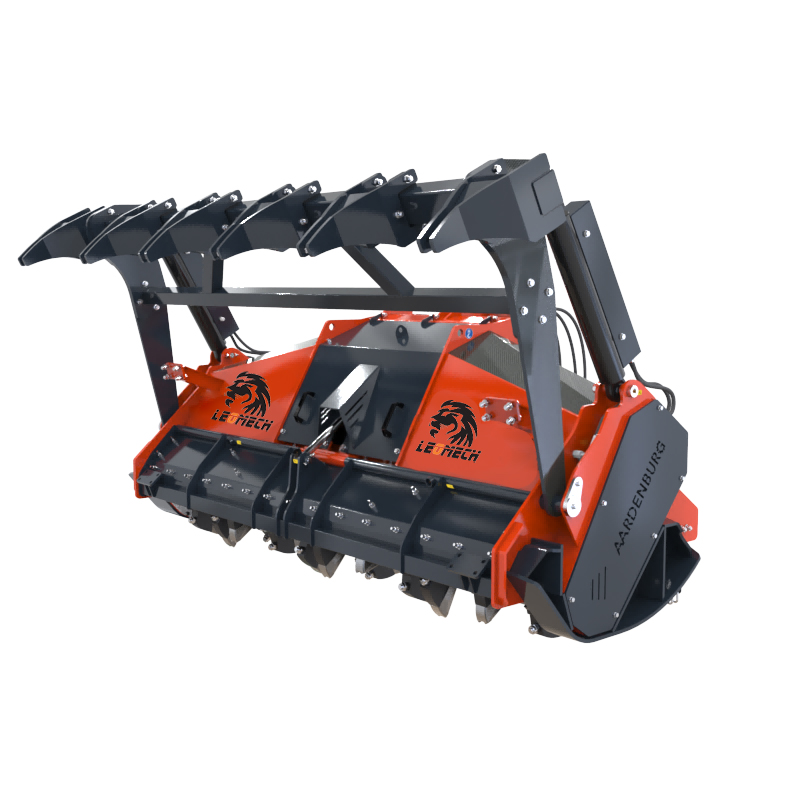
- If equipped with a trap door, set it to the fully open position to allow maximum exposure of the mulcher teeth to the working material.
- Fully engage the mulcher with the vegetation.
- Lower the cutter head gradually as working conditions permit. When engine RPM starts to drop, slowly reverse the carrier while continuing to lower the head. Tilt the cutter head downward as it approaches the ground, taking care not to rotate it too rapidly.
Adjust the carrier travel speed and shredding depth by monitoring engine RPM in response to the mulcher teeth making contact with and grinding the material. Do not allow engine speed to drop below its torque curve, or beyond the engine’s ability to recover quickly once the load is released.
Once the cutter head is properly positioned, it is ready for shredding the cleared material. A key to efficient operation is learning the optimal timing to reverse travel for finish processing. This operating mode delivers a clean, finished result.
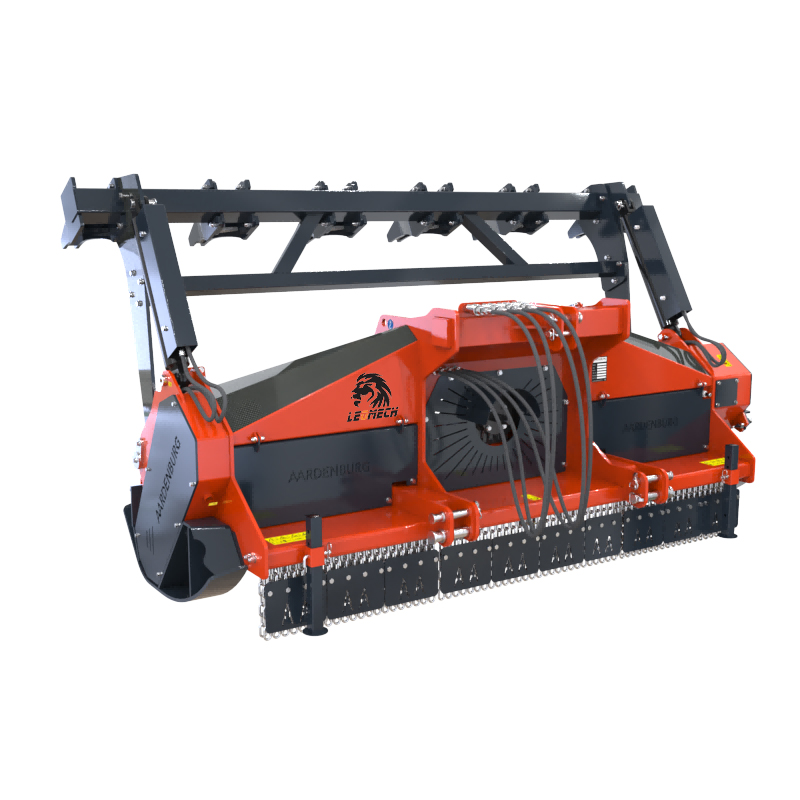
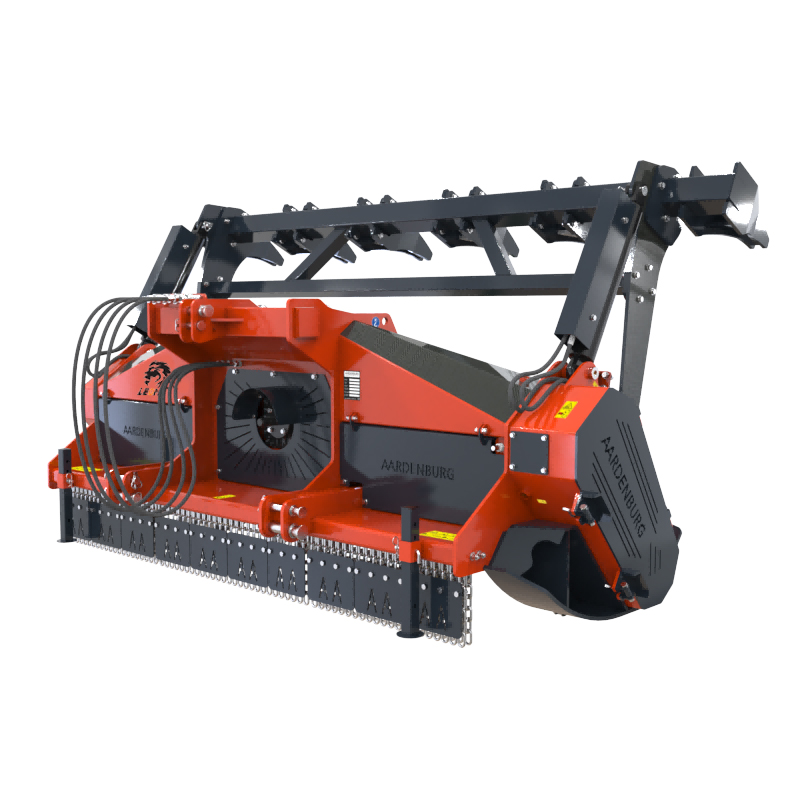
- Start reverse shredding when the chain curtain is slightly above the ground and the front corners of the mulcher skid shoes make ground contact.
Note: For finer grinding, raise the cutter head slightly off the ground after initial contact.
- Move the mulcher slowly backward to re-grind material repeatedly against the internal counter combs. Closing the trap door (if equipped) retains more material inside the mulcher shroud, ensuring safe operation and maximum shredding performance.
As with the cutting mode, slightly adjust the lift arm up and down according to engine RPM, and always operate in low gear.
Stump Grinding
Out-of-Ground Loose Stumps
- Tilt the cutter head rearward, raise it up, then lower it slowly to plane off thin layers of the stump. Repeat the raising and planing process gradually.
- As a general rule, avoid tilting the cutter head forward; the rotor may catch the loose stump and eject it toward the tractor.
- In some cases, use the rotor to dig a small pit, allowing the stump to roll into the cavity and become firmly pinned in place for safe grinding.
- Lower the mulcher to keep the stump firmly engaged and pinned to the ground. Proceed grinding downward, letting the mulcher teeth climb over and shear the stump surface.
- Repeat the process, grinding down the stump incrementally one to two inches at a time. Take extreme care to prevent the reduced stump from being ejected underneath the carrier
Fixed In-Ground Stumps
Grinding stumps that remain rooted in the ground simply requires back-and-forth tractor movement while lowering the cutter head in small increments.
Stump grinding is most effective when operating in the forward direction. This allows the rotor to traverse smoothly over the stump during grinding, leveraging gravity and positive kinetic energy for better cutting performance.
Notice
Reciprocating rotor movement adjusts the cutting angle and tool motion arc, reduces overall rolling resistance, shears wood fibers laterally, and assists in horizontal splitting of timber fibers.